About

Randy Krum infographic designerRandy Krum

President of InfoNewt.
Data Visualization, Infographic Design, Visual Thinking, Product Development and Marketing professional fascinated by good infographics.  Always looking for better ways to get the point across.

Infographic Design


InfoNewt Infographic Design

Search the Cool Infographics site

Custom Search


Subscriptions:


Feedburner

The Cool Infographics Gallery:

How to add the
Cool Infographics button to your:

Cool Infographics iOS icon

- iPhone
- iPad
- iPod Touch


Read on Flipboard for iPad and iPhone

Featured in the Tech & Science category

Flipboard icon

Twitter Feed
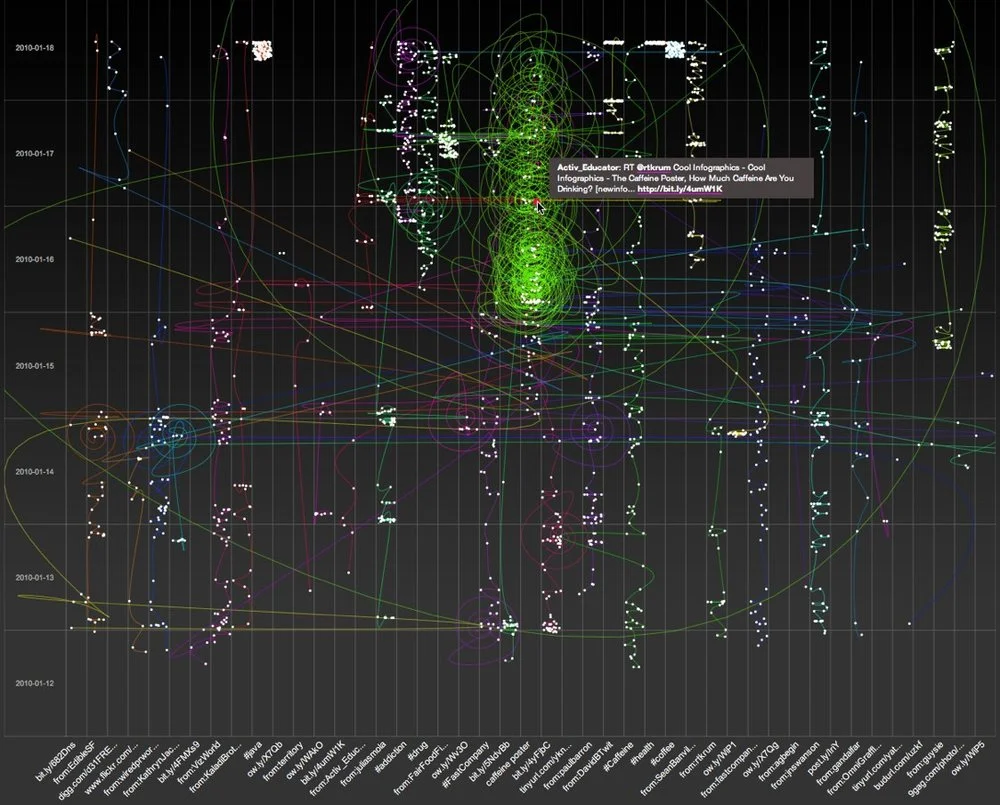
Caffeine Poster

The Caffeine Poster infographic

Google Insights

Entries in search (17)

Thursday
Mar142013

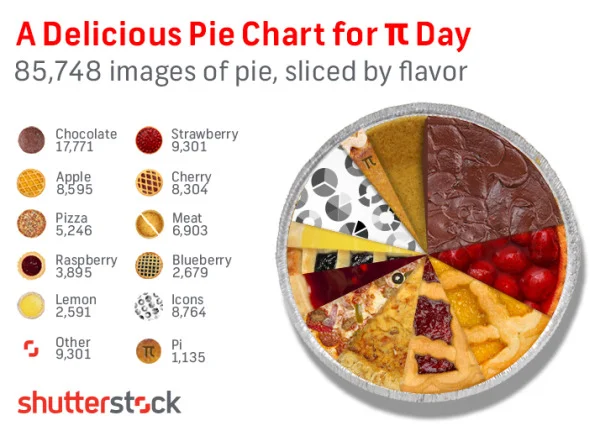
A Delicious Pie Chart for Pi Day!

A Delicious Pie Chart for Pi Day infographic

A fun little Pie Chart for Pi Day from the team at Shutterstock that looks at the search results from their own image library.

In honor of Pi Day (3/14) we took a dive into our library to suss out some Pie Knowledge, and ended up with the above appetizing infographic revealing the flavor breakdown of the 85,748 “pie” search results from our library. Yes, we know that “Pi” equals 3.14159… and not “Pie,” but we couldn’t resist the delicious comparison. Any way you slice it, this is some tasty data, and our mouths water for data here at Shutterstock.

Now I’m hungry…

Thanks to Danny for sending in the link!

Monday
Jan142013

SEO & Infographics - an Interview with Eric Enge

Eric Enge, Author and SEO GuruRecently, I had an amazing opportunity to interview Eric Enge about SEO & Infographics.  Eric has incredible insight in the world of SEO as a consultant, author, speaker and entrepreneur.

Eric Enge is the CEO of Stone Temple Consulting, a consulting company that provides a full range of Internet marketing optimization services including: strategic business planning, on page search engine optimization, link building, content optimization, conversion optimization, social media optimization, user engagement, and pay-per-click campaign development and optimization. Eric is co-author of the book The Art of SEO, a speaker at numerous search marketing events, and a contributing author to Search Engine LandSearch Engine Watch, and SEOmoz

 The interview covers some of the hottest topics that impact the infographics design industry today:

  • Infographics as part of a content marketing strategy
  • How Google’s changes to their algorithm impacts infographics
  • Infographics relevance and accuracy
  • Using attribution links, anchor text and embed code for infographics
  • Infographics on Pinterest 

You can read the complete interview on the InfoNewt blog

Friday
Jun292012

The Massive Challenge of Search Engine Complexity

Search Engine Complexity Infographic
Courtesy Stone Temple Consulting

The complexity of generating Search results online is HUGE.  The What’s So Hard About Search? infographic from SEO expert Eric Enge at Stone Temple Consulting takes a look at the massive numbers involved with indexing and searching the Web.

Building a search engine is a very complex task. I often find myself trying to justify to people why it is that search engines can’t understand their site. They seem fixated on believing that a search engine should understand it if a human can understand it. The short answer is that with an infinite amount of time the search engine could, but the scale of the Internet makes it oh so VERY hard.

The infographic below tries to give you some sense of the scale of the problem. Please note that a few numbers are hard to truly pin down, but I pulled them from the best sources I could. For example, no one really knows how many pages there are on the web, though Majestic SEO is aware of 3.7 trillion (the number I used) or the average web page size.

Regardless, the message is the same either way. The web is a really complex place!

Designed by InfoNewt, the design gathers data from a number of different sources to put together the picture of complexity.  Combining the number of web pages, the average number of links on each web page, the amount of data online and the number of searches every minute, you begin to understand the scale of the challenge search engines face.

This design takes a different approach by citing each data source along with it’s visualization instead of gathering them all at the bottom.  I think it works well with this many different data sources, and is easier for the readers to understand where each part of the data comes from.  All of the key elements are included at the bottom: copyright, brand logo and the URL to the infographic landing page so readers can always find the original (even when blogs repost it without linking or using the embed code).

I just have to say “Cheers!” to the developer teams that tackle this problem every day.  The scope of this challenge will only get bigger in the future!

Thanks to Eric and the team at Stone Temple for being great to work with!

Tuesday
May032011

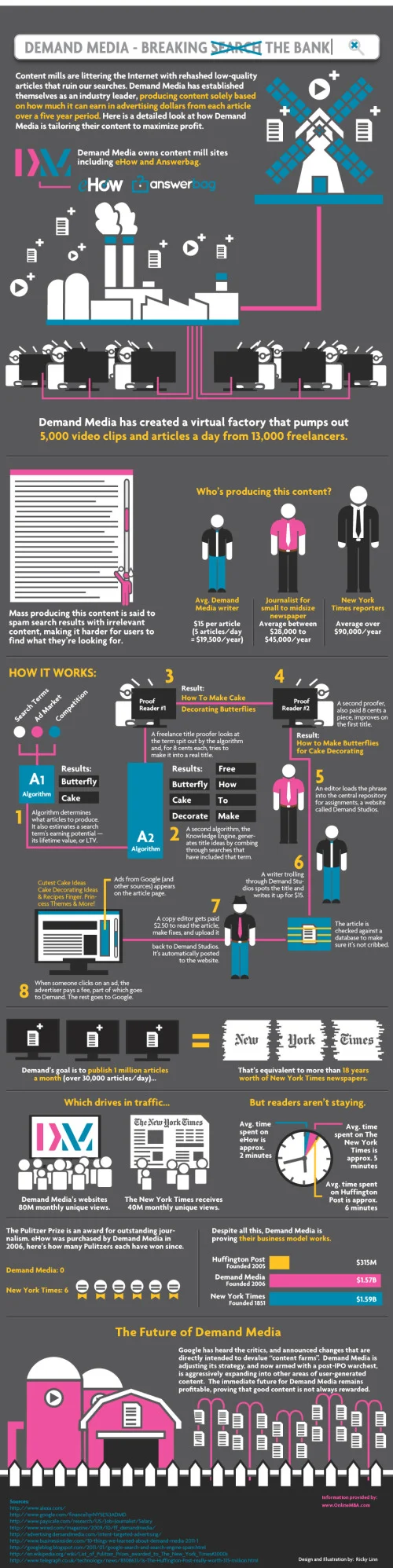
Demand Media - Breaking the Bank

Demand Media - Breaking the Bank is a cool infographic published on OnlineMBA.com by designer Ricky Linn.

The content itself in interesting, and I remember reading the Wired article listed in the sources.  I like that the infographic combines the process flow of content creation, but also visualizes relevant statistics about how big and profitable Demand Media has become.  Overall it tells a good story.

Found on SiliconValleyWatcher.

Friday
Nov122010

The Brutal Decline of Yahoo!

Here’s a fun one from Scores.org The Brutal Decline of Yahoo! examines the troubled history of Yahoo! in search, advertising and acquisitions.

Designed by our friend, Jess Bachman, this one relies heavily on visuals related to the events on the timeline over the last 16 years.  A little text heavy for my tastes, but I had forgotten at least half of this stuff that Yahoo! messed up.  It’s a little amazing that they’re still as big as they are.

Wednesday
Jun302010

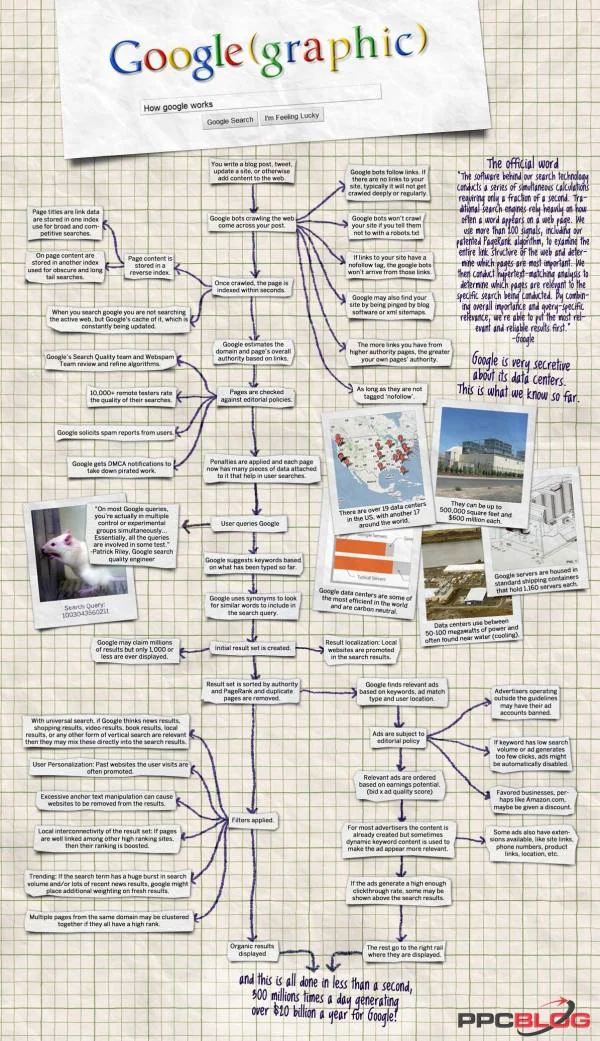
Google(graphic) - How Google Works


PPCblog.com brings us the Google(graphic) flowchart that documents what happens in the fraction of a second after 300 million people press the Search button every day.  Created by infographic designer Jess Bachman at WallStats.com.

So here is my latest infographic, hot off the press.  How Google Works.  It’s a flow type chart that diagrams the process of how google gets it data and what happens in the second after you search.  It’s a $20 billion a year process for google, and pretty interesting.

Wednesday
Apr212010

The Social Media Effect

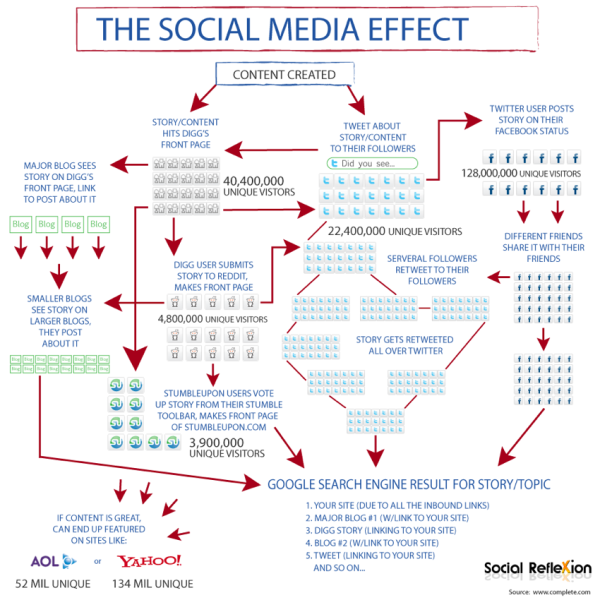
This was the original infographic, The Social Media Effect, from InfographicWorld that inspired part of yesterday’s post, The Visual FAQ of SEO.  This infographic maps out the process of what happens when social media gets excited about your posted content.

A great example of why I started the Cool Infographics blog in the first place.  Create a great place to find inspiration to create your own infographics.

Tuesday
Apr202010

The Visual FAQ of SEO infographic

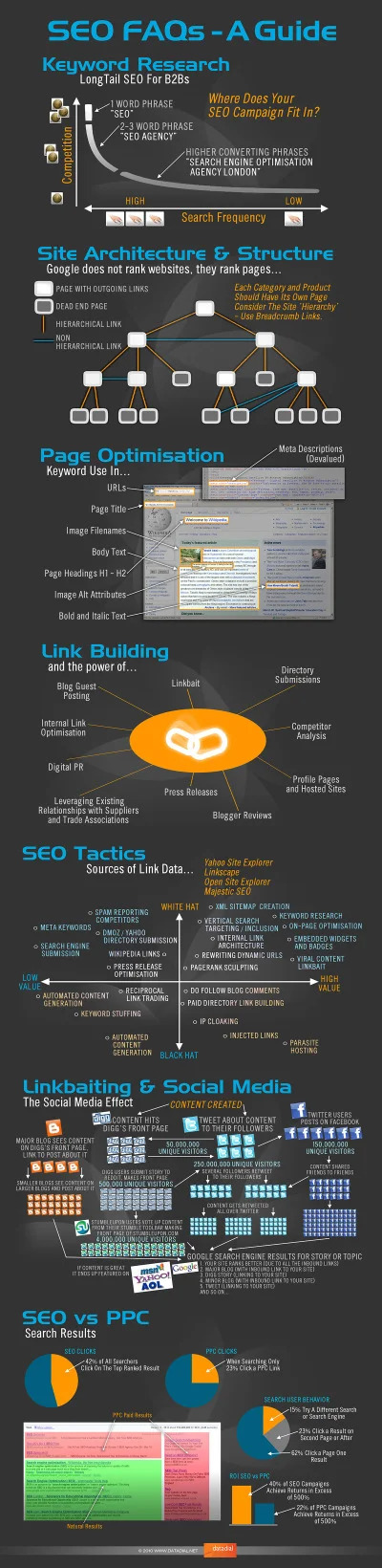
A Visual FAQ to SEO is a great infographic from Matt at Datadial.net covering many of the different aspects of Search Engine Optimization for your web pages.

Images are a fantastic way to present data and abstract concepts, they’re a much clearer way of getting information across and more people take the time to digest it. I thought it would be a good idea to try to present solutions and explanations to the more common SEO questions that we hear from our clients.

The image covers everything from basic keyword research concepts, through site architecture, page optimisation, link building, SEO tactics, social media, and some basic SEO and PPC clickthrough stats and explantions.

Portions appear to be inspired by The Social Media Effect from Infographic World.  (Look for tomorrow’s post)

Found on Social Media Graphics

Wednesday
Mar312010

The World Christianity Maps

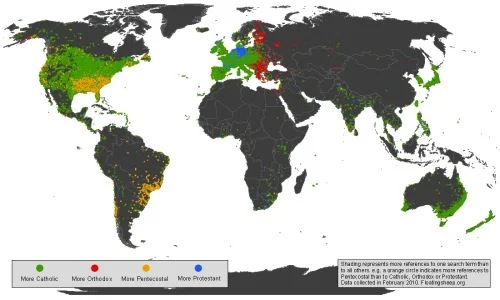
From FloatingSheep.com, this is the Christianity Map that maps the volume of searches related to the different branches of Christianity across the globe.  The great cartographers from Floating Sheep published three maps showing the world, the U.S. and Europe.

…discovered patterns that are incredibly clear. Catholics are most visible in much of the Northeast and Canada, with Lutherans taking the Midwest, Baptists the Southeast, and Mormons unsurprisingly taking much of the mountain states. Methodists, interestingly, seem to primarily be most visible in a thin red line between the Southern Baptists and everyone else.

Taking a closer look at Europe, there is a fascinating split between Orthodox Eastern Europe, Protestant Germany, and Catholic everywhere else. In places such as the UK that contain more Protestants than Catholics it is likely that people aren’t using the actual term “Protestant” as a signifier of their religion.

These are a more detailed look specifically at Christianity after some of their earlier work on the Google Geographies of Religion that look at searches for the different figures of religion across the globe.

Found on the GOOD Blog and The Atlantic.

Wednesday
Mar102010

What Do You Suggest? A Visual Search Interface

Using a mindmap-style visual interface, WhatDoYouSuggest.com shows you the search results from Google in an easy-to-use interface.  Created by Simon Elvery, the interface returns the top words that Google suggests based on your initial query.  By clicking on the relevant words, the search becomes more relevant, and more words are suggested to narrow your search.

Both the order of words and the thickness of the lines are meaningful.  More detailed information is available on the Simon’s blog.


What Do You Suggest takes a seed from you (or gives you something random) then guides you on a journey through language and the collective lives of Google users.

Using data from Google to make suggetions on where you might like to go next, What Do You Suggest is an experimental and interactive environment designed to explore how we use language and search on the internet.

  • The words that appear first in each set of options are the words Google thinks are most likely to be what people are looking for.
  • The words joined by the thickest lines are ones which will produce the most results if you searched for them on Google.


Of course, I had try see what “infographics” cam up with…

Found on Information Aesthetics and Gizmodo.